Multi-Lane Discipline — The Slow Lane Is Not Optional
NH44, India's longest highway. A sedan doing 90 km/h plants itself in the rightmost lane and stays there for 40 kilometres, forcing every overtaking vehicle to undertake on the left. Trucks weave. Impatient drivers tailgate. Three near-misses in one stretch. The sedan driver sees no problem — 'I am not speeding.' Lane hogging is not a minor inconvenience. It is a crash-causing offence.
India's Lane System on Multi-Lane Roads
On a three-lane highway, the lanes have defined roles under traffic rules. Lane 1 (leftmost): for slow vehicles, heavy trucks, buses, and vehicles entering or exiting. Lane 2 (centre): normal cruising speed for cars and light vehicles. Lane 3 (rightmost): for overtaking only — you must return to Lane 2 after completing an overtake. Driving continuously in Lane 3 regardless of speed is lane hogging — an offence under the Central Motor Vehicles Rules.
Occupying the overtaking lane (rightmost lane) as a permanent cruising lane — regardless of your speed — is illegal. It forces following vehicles to undertake (overtake on the left), which is also illegal. The correct rule: use the right lane only to overtake, then return left. Even at the speed limit, lane hogging obstructs traffic flow and is a prosecutable offence under the Motor Vehicles Act.
Overtaking on the left side (undertaking) is prohibited in India. India drives on the left, meaning all overtaking must happen on the right. Undertaking is dangerous because the vehicle ahead cannot anticipate a vehicle passing on its left, and left-turn signals may not be seen by the undertaking driver. On motorways, undertaking is especially dangerous at high speed differentials. If someone is hogging the right lane, wait — do not undertake.
Safe Following Distance at Highway Speeds
The 2-second rule for urban driving becomes the 3–4-second rule at highway speeds. At 100 km/h, 100 metres takes about 3.6 seconds to cover. Keep at least 100 metres from the vehicle ahead in normal conditions — more in rain, fog or at night. A useful check: when the vehicle ahead passes a fixed point (a sign or bridge), count 'one-thousand-one, one-thousand-two, one-thousand-three' — if you reach the point before finishing the count, you are too close.
Many expressways restrict heavy goods vehicles to the left two lanes only. Trucks in the overtaking lane are a significant hazard — they are slower, create large blind spots, and take far longer to brake. If a truck is in the right lane, give way safely without undertaking. You can report sustained lane violations via the NHAI helpline 1033 or the NHAI app.
Cruise in the centre lane at highway speed. Move right to overtake only when safe — check mirrors, signal right, check blind spot over shoulder, overtake, signal left, check centre mirror, return to centre lane. Keep 100m+ following distance at 100 km/h. Allow merging vehicles space from the left. Never change more than one lane at a time. Use indicators for every lane change.
Key Lane-Discipline Signs

Keep Left
Blue circle with white arrow pointing left — blue means positive instruction, not prohibition.
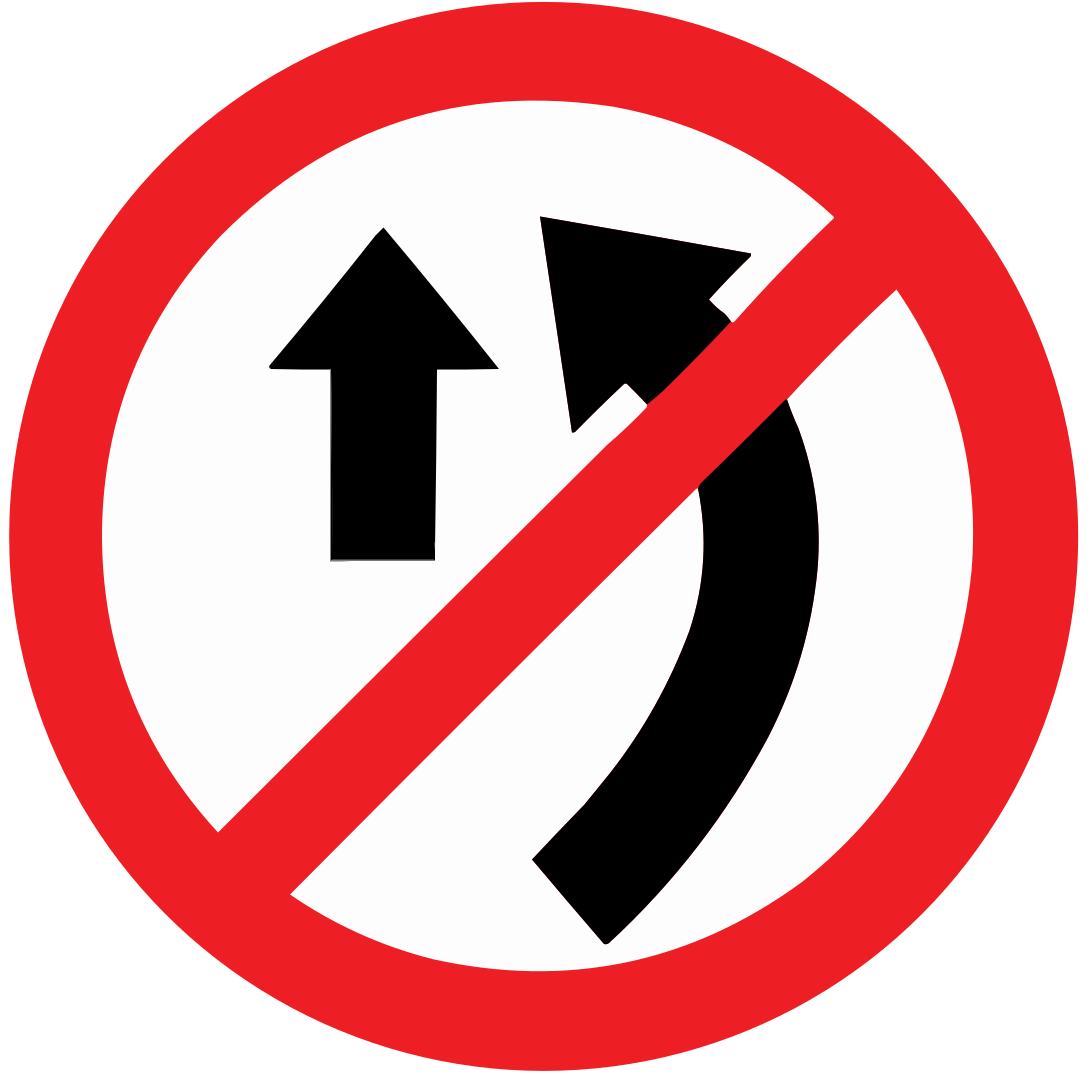
No Overtaking
Two cars side by side with a cross — a tug-of-war you are forbidden to start.
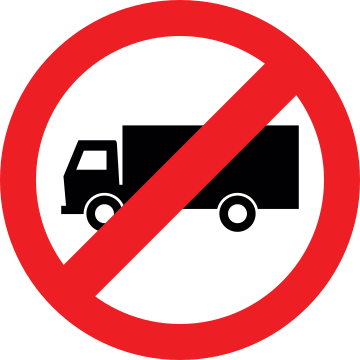
Trucks Prohibited
Truck silhouette in a crossed red circle — big vehicles, no entry.
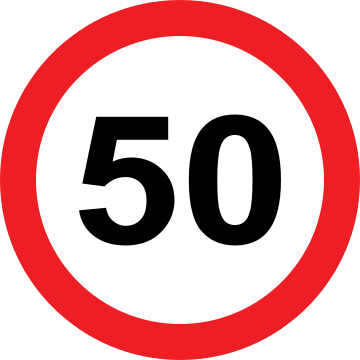
Speed Limit 100 km/h
100 in a ring — three digits, three lanes minimum.
You are driving at 90 km/h in the right (overtaking) lane of a three-lane highway and have just completed an overtake. What should you do?
Tap an option to reveal the answer
- ✓Lane 1 (left) = slow/entry/exit; Lane 2 (centre) = normal cruising; Lane 3 (right) = overtaking only.
- ✓Return to the centre lane immediately after overtaking — lane hogging is an offence regardless of speed.
- ✓Never undertake (overtake on the left) — it is illegal in India in all circumstances.
- ✓Keep 100m+ following distance at 100 km/h — increase in rain, fog or at night.
- ✓Use indicators for every lane change and always check mirrors and blind spot before moving.
Lawful provides legal information, not legal advice.