Expressway Basics — Entry, Exit & Merging
The Mumbai–Pune Expressway access ramp stretches ahead. A nervous driver hesitates at the ramp end, doing 40 km/h while expressway traffic flows at 100 km/h. He signals and pulls in — forcing three vehicles to brake hard. A truck in the left lane swerves right. All of this was avoidable. The acceleration lane exists for exactly one purpose: reaching traffic speed before you merge.
The Acceleration Lane — Use Its Full Length
The ramp leading onto an expressway is called the acceleration lane. Its purpose is to let you match the speed of existing traffic before merging. You must use the full length of the ramp to reach traffic speed. Check your right mirror and blind spot before merging, signal right, find a gap, and join the left lane at matching speed. Never slow down at the ramp end waiting for a gap — this creates a deadly conflict between slow-entering and fast-moving vehicles.
Minimum Speed on Expressways
Unlike urban roads, expressways have both maximum and minimum speed limits. In India, the minimum speed on most expressways is 40–60 km/h (varies by state and road designation). Driving below the minimum speed is as illegal as speeding — it creates hazardous speed differentials with other traffic. Check the posted limits at the entry point of each expressway before joining.
Stopping anywhere on the main expressway carriageway — to check a map, take a call, look at an accident, or retrieve dropped items — is illegal and extremely dangerous. Vehicles approaching at 120 km/h have less than 3 seconds to react to a stationary obstacle. If you must stop urgently, reach the hard shoulder (left edge), move as far left as possible, switch on hazard lights, and call for help.
Exit Ramps — Signal Early, Decelerate on the Ramp
Signal your exit at least 300–500 metres before the ramp on a highway — well before the exit sign. Move progressively to the left lane early. Only begin decelerating once you are on the exit ramp itself — not on the main carriageway. Braking on the main road to make an exit causes rear-end collisions from following vehicles. If you miss your exit, continue to the next one — never reverse on an expressway.
fine for using a non-FASTag lane at toll plazas (double toll applies)
FASTag became mandatory for all vehicles from February 16, 2021
Source: Ministry of Road Transport and Highways notification, 2021
FASTag — Mandatory Since February 2021
FASTag is an RFID sticker fixed to the windscreen that enables automatic toll deduction from a prepaid wallet. It is mandatory on all four-wheelers under MoRTH rules effective February 16, 2021. Vehicles without FASTag using a FASTag-only lane are charged double the toll amount. FASTag lanes allow passage without stopping — keep moving at 10–20 km/h to allow the reader to scan. Ensure your FASTag wallet balance is topped up before long highway journeys.
U-turns and reverse driving are strictly prohibited on all expressways. If you miss a junction, continue to the next exit and turn around there. Unauthorised U-turns and reversing are among the most dangerous acts on a highway — they create head-on collision risks at extremely high relative closing speeds. Designated emergency U-turn points exist at intervals for authorised vehicles only.
(1) Approach the acceleration ramp, note the posted speed limit. (2) Accelerate smoothly on the ramp to match highway traffic speed. (3) At the merge point, signal right, check right mirror and blind spot over your shoulder. (4) Find a suitable gap in the left lane. (5) Merge at matching speed without braking. (6) Move further right only once safely established in the left lane.
Key Expressway Signs
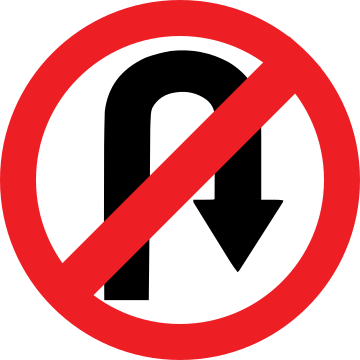
No U-Turn
U-arrow with a cross — the letter U itself is banned.
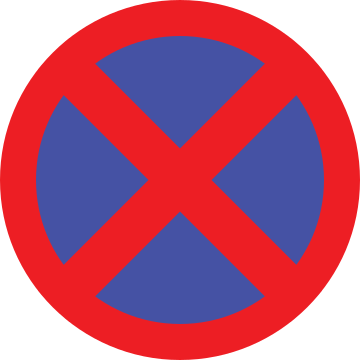
No Stopping / No Standing
Circle with X through it — absolute prohibition, no exceptions.
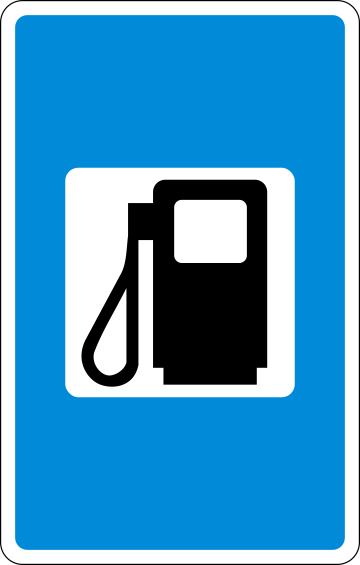
Filling Station
Blue square with fuel pump — refuel while you can on long stretches.
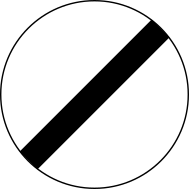
End of All Restrictions
Black diagonal lines through a white circle — restrictions crossed out.
What is the correct technique when merging onto an expressway from an acceleration ramp?
Tap an option to reveal the answer
- ✓Use the full acceleration ramp to reach traffic speed — never merge slowly onto a fast-moving expressway.
- ✓Expressways have minimum speeds (typically 40–60 km/h) — driving too slowly is illegal and dangerous.
- ✓Signal your exit 300–500m early; decelerate on the ramp, never on the main carriageway.
- ✓FASTag is mandatory since February 2021 — ensure sufficient wallet balance before highway travel.
- ✓Never stop on the expressway carriageway — hard shoulder only, with hazard lights on.
Lawful provides legal information, not legal advice.