Visibility — Wipers, Fog Lights & Speed in Rain
A sudden Kerala monsoon squall reduces visibility to near zero. The driver ahead hits their brakes — but you see it too late because your wipers are leaving wide smear arcs across the windscreen. Three seconds lost trying to find the wiper speed lever. The car ahead has already stopped. You brake hard — tyres screaming — and stop with 40 centimetres to spare. Wipers are not a minor maintenance item.
Windshield Wipers — Maintenance Matters
Wiper blades degrade from UV exposure, heat and friction. Replace them every 6–12 months or immediately when you notice: streaking (leaving water trails), chattering (jumping across the screen), squeaking, or skipping. Always carry a spare set during monsoon season. Lift wipers off the screen when parked in intense sun to prevent the rubber bonding to the glass. Before driving in rain, run the washers first to clear dust that can scratch the glass when wipers first engage.
Clearing the Inside — Defogger & Air Conditioning
In rain, humidity inside the cabin causes the windscreen to fog on the inside. To clear it fast: turn on the rear electric defogger (the rear windscreen button), set the front A/C to the windscreen demist mode (fresh air, directed at screen), and switch A/C on — cold, dry air clears the glass within 30–60 seconds. Running the heater alone without A/C makes internal fogging worse by adding warm moist air. Keep a side window slightly open if A/C is off.
High beam in fog does the opposite of what you want. The beam strikes billions of suspended water droplets and reflects light directly back into your eyes, creating a white wall that reduces visibility to nearly zero. In fog, always use low beam (dipped headlights) plus front fog lights if your car has them. In very dense fog, slow to a speed at which you can stop within your visible distance.
Speed Reduction in Rain — How Much?
As a practical rule, reduce speed by 20–30% in moderate rain and by 30–50% in heavy rain or fog. On a road where you normally drive 80 km/h, heavy rain means slowing to 50–60 km/h. In fog where visibility is below 50 metres, do not exceed 40 km/h. Your speed must match your actual visibility distance — if you can clearly see only 30 metres ahead, you must be able to stop within 30 metres.
The rule of thumb: if water depth is above the bottom of your door sill, or above the exhaust pipe outlet, do not attempt to cross. Driving through deep water at speed creates a bow wave that can enter the air intake. If water reaches the engine's air intake it causes hydrolocking — water in the cylinders causes catastrophic and extremely expensive engine damage. If you must cross a shallow flood, do so in first gear at low speed, keeping engine revs slightly elevated.
Before setting off in rain: activate wipers, activate defogger + A/C to clear screen, switch on headlights (low beam), reduce speed by 20–30%, increase following distance to 4+ seconds. During rain: wipe mirrors at every stop, watch for standing water ahead, avoid overtaking in heavy rain. After heavy rain: test brakes gently at low speed to dry wet brake pads before relying on them.
longer stopping distance in dense fog at 80 km/h vs clear conditions
Most drivers fail to reduce speed sufficiently in poor visibility
Source: NHTSA visibility research, adapted for Indian driving conditions
Signs Relevant to Wet-Weather Driving
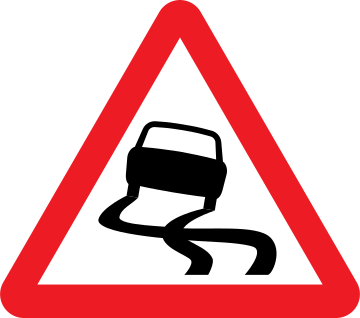
Slippery Road
Triangle with car and wavy lines — the car is literally sliding on the sign.

Dip Ahead
Triangle with a valley shape — opposite of the hump.
Your windscreen is fogging up from inside during rain. What is the fastest way to clear it?
Tap an option to reveal the answer
- ✓Replace wiper blades every 6–12 months — streaks, chattering and skipping mean replace now.
- ✓A/C directed at the windscreen clears internal fogging in 30–60 seconds; heating alone makes it worse.
- ✓Never use high beam in fog — it reflects back and creates a blinding white wall. Use low beam + front fog lights.
- ✓Reduce speed by 20–30% in moderate rain; 30–50% in heavy rain or fog.
- ✓Do not cross flooded roads where water exceeds the exhaust pipe — hydrolocking destroys engines.
Lawful provides legal information, not legal advice.