The Fatal Five — India's Top Crash Causes
India records more than 1.55 lakh road deaths every year — one death every three minutes. The same five behaviours appear in the majority of fatal crashes year after year. They are not freak accidents. They are predictable, preventable choices. Knowing what they are is the first step to never becoming a statistic.
road deaths in India in 2021 — the highest in the world
Equivalent to a full passenger aircraft crashing every single day
Source: NCRB Road Accidents in India 2021
Speeding is the single largest contributor to road deaths in India, involved in approximately 40% of fatal crashes. At impact, higher speeds mean exponentially greater energy transferred to the human body. A pedestrian struck at 30 km/h has a 90% survival chance. At 60 km/h, that drops to 50%. At 80 km/h, survival is less than 20%. The MVA s.183 fine is ₹1,000 first offence — a trivial amount compared to the cost of a life.
Driving with a blood alcohol content (BAC) of 30 mg per 100 ml of blood or higher is illegal under MVA s.185. Even small amounts of alcohol impair reaction time, depth perception, and decision-making. The penalty is ₹10,000 fine and/or 6 months imprisonment for a first offence; repeat offence: ₹15,000 and/or 2 years imprisonment. A single glass of alcohol is enough to impair driving — there is no safe level for driving.
Seatbelts reduce the risk of death in a crash by up to 45% for front passengers and 25% for rear passengers. Since 2022, rear seat seatbelts are compulsory for all passengers in India. The fine for not wearing a seatbelt is ₹1,000. A crash at 60 km/h without a seatbelt throws you forward with the same force as falling from a three-storey building. Airbags are designed to work with seatbelts — without one, the airbag itself can be fatal.
Using a handheld mobile phone while driving under s.184 MVA attracts a fine of ₹5,000 (first offence) and ₹10,000 (repeat), with possible 3-month licence suspension. Research shows that using a phone while driving — even hands-free — reduces your effective attention to the road by up to 37%. Reaction time when using a phone is worse than at the legal drunk-driving limit. Even glancing at a notification for 2 seconds at 80 km/h means travelling 44 metres completely blind.
Drowsy driving causes impairment equivalent to a BAC of 0.05%. After 18 hours without sleep, your reaction time and judgment are comparable to a drunk driver. Warning signs include difficulty keeping eyes open, drifting between lanes, missing exits, and micro-sleeps (momentary blackouts of 1–4 seconds). At 100 km/h, a 4-second micro-sleep covers 111 metres with zero driver input. If you feel drowsy, pull off safely and rest — no journey is worth your life.
Speed and Safety Signs
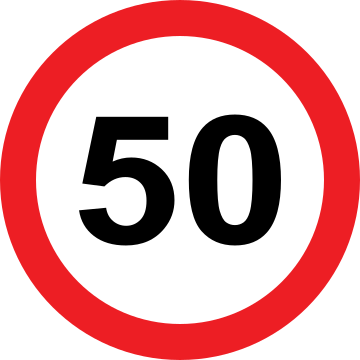
Speed Limit 80 km/h
80 = two circles side by side. Two circles, two-lane road.
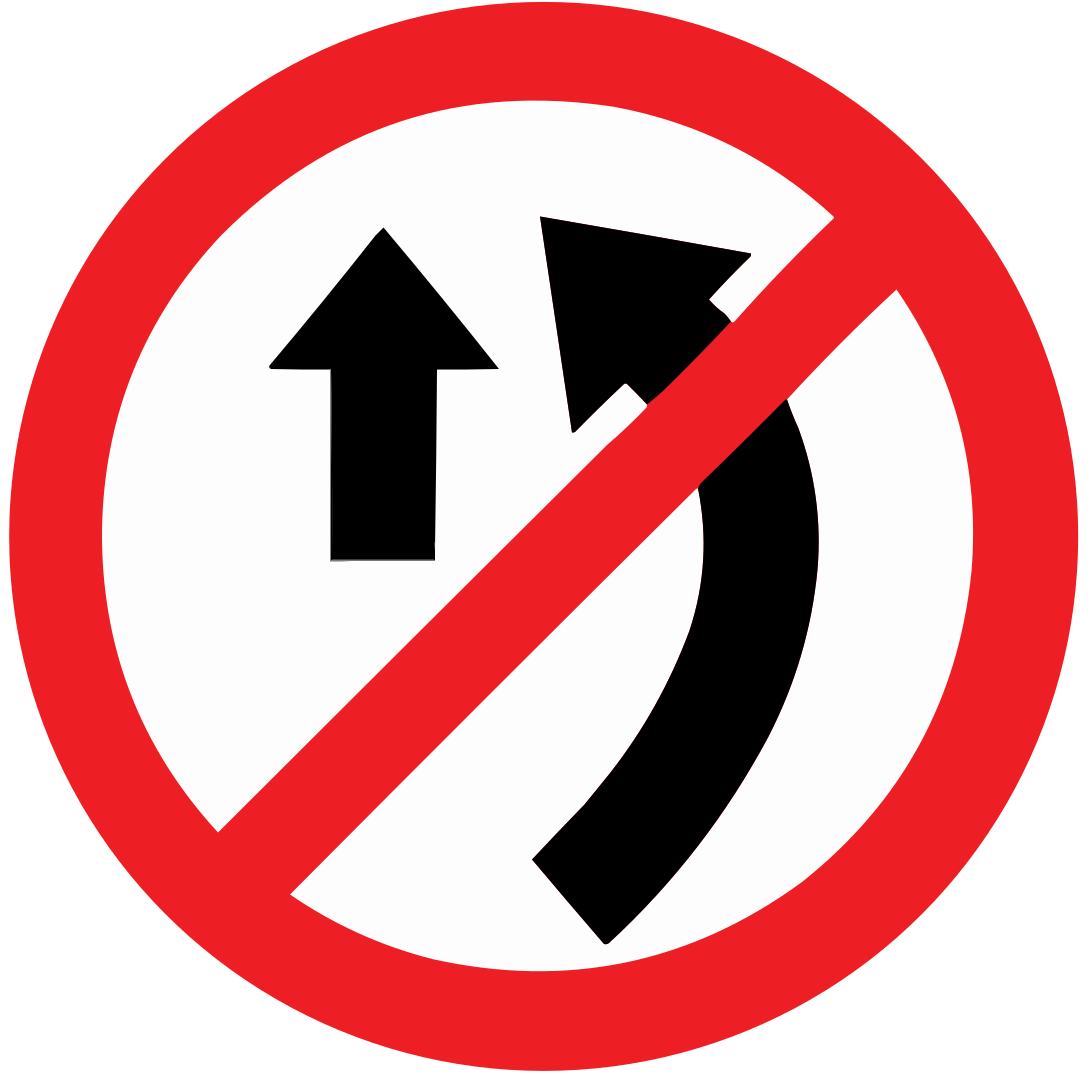
No Overtaking
Two cars side by side with a cross — a tug-of-war you are forbidden to start.
fine for drunk driving — first offence
Plus up to 6 months imprisonment | Repeat offence: ₹15,000 + 2 years jail
Source: MVA 1988 s.185 (as amended 2019)
A pedestrian is crossing the road. Your vehicle is travelling at 80 km/h. Approximately what is the pedestrian's chance of surviving if hit at this speed?
Tap an option to reveal the answer
- ✓The Fatal Five: Speeding, Drunk Driving, No Seatbelt, Phone Use, Fatigue — responsible for the majority of India's 1.55 lakh annual road deaths.
- ✓Drunk driving limit: 30 mg BAC per 100ml blood; fine ₹10,000 + 6 months jail (MVA s.185).
- ✓Rear seat seatbelts compulsory since 2022; fine ₹1,000 for non-compliance.
- ✓Mobile phone use while driving: ₹5,000 fine; causes attention loss equivalent to exceeding the drunk-driving threshold.
- ✓If drowsy, pull over and rest — a 4-second micro-sleep at 100 km/h covers 111 metres with zero control.
Lawful provides legal information, not legal advice.