Speed Limits in India — National, State & City Rules
You're on a national highway with a clear road stretching ahead, doing 115 km/h, feeling fully in control. Then a speed camera flash. Two weeks later, a fine notice arrives. You didn't see any speed limit sign — but ignorance of the law is not a defence. Every road in India has an applicable speed limit even when no sign is visible.
The National Speed Limit Hierarchy
India applies a tiered speed limit system under the Central Motor Vehicles Rules 1989. For private cars: national highways = 100 km/h, state highways = 80 km/h, city and urban roads = 50 km/h, school and hospital zones = 25 km/h, residential streets = 30 km/h. For goods vehicles (trucks), the limits are lower: 80 km/h on NHs, 60 km/h in cities. Two-wheelers are capped at 60 km/h on NHs. These are maximums — local signs can set lower limits and always take precedence.
How Local Signs Override National Defaults
A speed limit sign (circular, red border, number inside) overrides the national default for that stretch. If you see a '40' sign entering a town on an NH, the applicable limit is 40 km/h regardless of the highway classification. The override remains in force until you see an 'end of restriction' sign or a new speed limit sign. When in doubt, assume the lower limit applies.
Speed Limit Signs
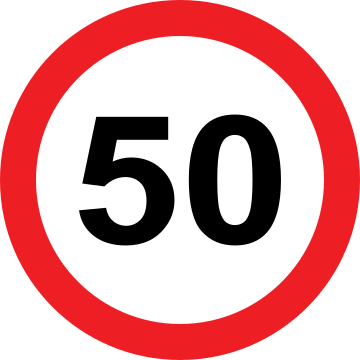
Speed Limit 30 km/h
Number in a red ring = hard limit. Think of the ring as a fence you cannot jump.
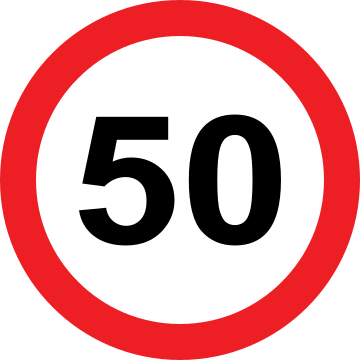
Speed Limit 50 km/h
50 in a red ring — half a century, half the highway speed.
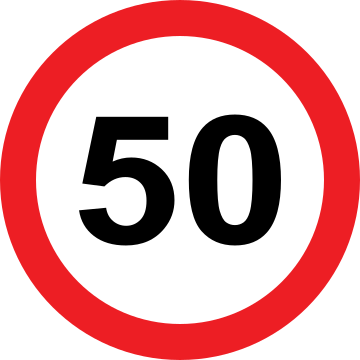
Speed Limit 80 km/h
80 = two circles side by side. Two circles, two-lane road.
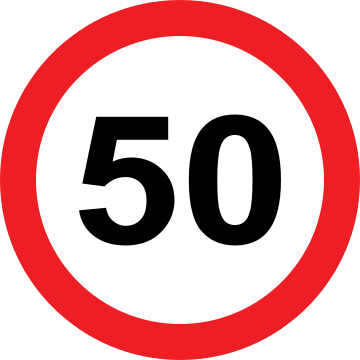
Speed Limit 100 km/h
100 in a ring — three digits, three lanes minimum.
Many expressways in India also set minimum speed limits, typically 40 km/h. Driving below the minimum is as illegal as exceeding the maximum — it creates speed differentials that cause rear-end collisions. If your vehicle cannot maintain the minimum speed, you must use the service lane.
Speed limits in school zones are set at 25 km/h during school hours. These zones are marked with advance warning signs. Children are unpredictable road users who can step out without warning. Exceeding the school zone limit while causing injury carries enhanced penalties under BNS s.281 (rash and negligent driving).
How Speed Cameras Work in India
Speed cameras (fixed and mobile) capture your vehicle's speed using radar or lidar. Fixed cameras are often placed just before major intersections and accident-prone stretches. Mobile units can be deployed by police anywhere. The camera photographs your number plate and the fine is issued to the registered owner. Average speed cameras on expressways calculate your speed between two points — you cannot slow down at one camera and speed up again.
fine for speeding — first offence
Repeat offence within a year: ₹2,000 | Possible community service
Source: MVA 1988 s.183 (as amended 2019)
You are driving a private car on a state highway. No speed limit sign is visible. What is the applicable speed limit?
Tap an option to reveal the answer
- ✓National highway default: 100 km/h for cars; state highway: 80 km/h; city: 50 km/h; school zone: 25 km/h.
- ✓Local speed limit signs always override national defaults.
- ✓Average speed cameras measure your speed between two points — you cannot cheat them by slowing at one.
- ✓Trucks and two-wheelers have lower limits than cars on the same road.
- ✓First offence fine: ₹1,000; repeat within a year: ₹2,000 under MVA s.183.
Lawful provides legal information, not legal advice.