Overtaking — When, Where, and How
A truck is crawling at 40 km/h on a two-lane highway. You've been stuck behind it for 3 km. Ahead, the road curves left. An impatient driver behind you flashes lights. What do you do? The answer defines whether you arrive safely — or not at all.
The Golden Rule: Always Overtake on the Right
In India, you must always overtake on the right side of the vehicle in front. Overtaking on the left (undertaking) is illegal and dangerous because the driver ahead does not expect a vehicle to pass on their left. The only exception is when the vehicle in front is turning right and has moved to the centre to do so — you may then pass on its left.
The Safe Overtaking Procedure — MSM
Before overtaking, use the Mirror-Signal-Manoeuvre sequence: (1) Check your right mirror and blind spot for vehicles already overtaking you. (2) Signal right well in advance to alert the driver ahead and those behind. (3) Check the road ahead is completely clear — you need distance for your vehicle plus the vehicle being overtaken to fit. (4) Accelerate briskly past, staying on the right. (5) Signal left and return to your lane only when the overtaken vehicle is visible in your rear-view mirror.
Overtaking is strictly prohibited at bends and curves (you cannot see oncoming traffic), at crests of hills (hidden vehicles ahead), at zebra crossings and pedestrian crossings, at intersections and junctions, where there is a solid white or yellow centre line, within 50m of a railway crossing, and at bus stops. These are positions where a head-on collision is almost unsurvivable.
Many fatal overtaking crashes happen because drivers begin passing without confirming the full stretch is clear. You need enough distance for your acceleration run plus a safety margin after re-entering your lane. On a highway at 80 km/h, assume you need at least 400–500 metres of clear road before you begin overtaking a truck.
After overtaking, indicate left, check your left mirror to confirm the overtaken vehicle has receded behind you, and move back to the left lane smoothly. Do not cut in sharply — the vehicle you overtook is still travelling at speed and a sharp cut-in risks a collision. Establish at least a 2-second gap before returning.
Overtaking-Related Signs
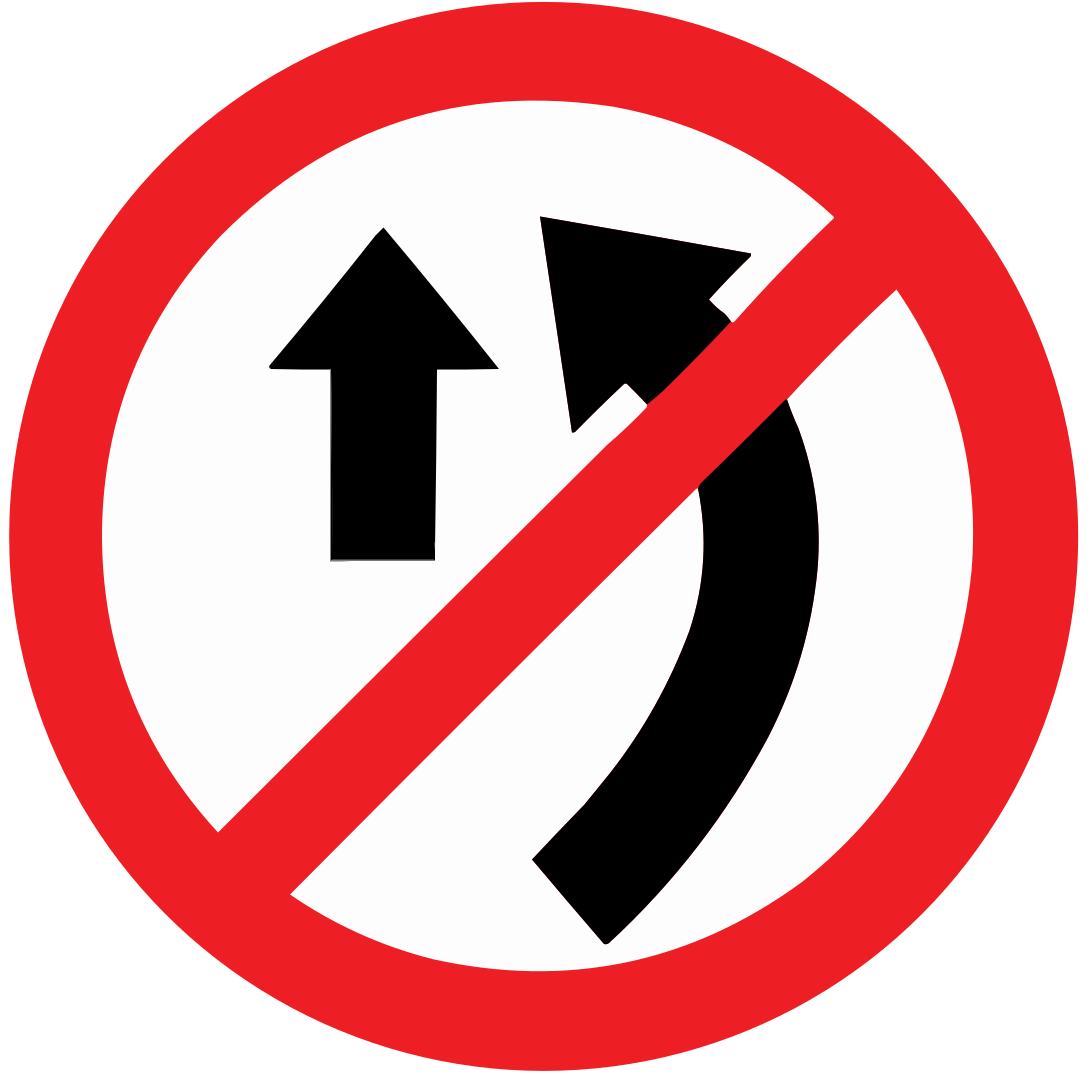
No Overtaking
Two cars side by side with a cross — a tug-of-war you are forbidden to start.
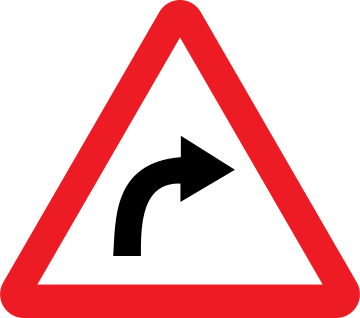
Right Bend Ahead
Triangle with right-curving arrow — the road is telling you its own shape ahead.
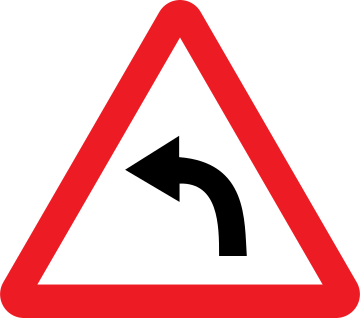
Left Bend Ahead
Triangle with left-curving arrow — mirror of the right bend.
fine for dangerous driving / unsafe overtaking (first offence)
Repeat offence: ₹10,000 + possible imprisonment under BNSS
Source: MVA 1988 s.184 (as amended 2019)
You are about to overtake a slow bus on a national highway. The road ahead appears clear but curves to the right in about 200 metres. What should you do?
Tap an option to reveal the answer
Which side must you always overtake on in India?
Tap an option to reveal the answer
- ✓Always overtake on the right — left-side overtaking (undertaking) is illegal.
- ✓Use Mirror-Signal-Manoeuvre before every overtake.
- ✓Never overtake at bends, hills, crossings, intersections, or on solid white/yellow lines.
- ✓Ensure the complete road ahead is clear — not just the visible portion.
- ✓Return to the left lane only after confirming a 2-second gap behind the overtaken vehicle.
Lawful provides legal information, not legal advice.