Right of Way — Who Goes First?
Two cars reach an unmarked crossroads at the same time from different directions. Neither has a stop sign. Both drivers edge forward cautiously. One eventually waves the other through — but who actually had priority? Knowing this rule can prevent a collision when neither driver stops to negotiate.
The Priority Hierarchy on Indian Roads
Right of way follows a strict hierarchy. At the top are emergency vehicles — ambulances, fire engines, and police vehicles with sirens and lights active must be given clear passage immediately. Next are pedestrians who are already crossing on a green signal or at a marked zebra crossing. Then comes the right-hand rule at uncontrolled intersections. At the bottom are merging vehicles, who must yield to through traffic.
When you hear a siren or see flashing lights from an ambulance, fire engine, or police vehicle, you must pull to the left and stop, allowing the emergency vehicle to pass. Blocking an emergency vehicle is an offence under s.194A MVA and can be a matter of life and death for the patient inside.
At an intersection with no signals, signs, or traffic police, the vehicle approaching from your right has priority. You must slow down and allow it to proceed first. This rule applies universally across India at unmarked crossroads, lane merges, and exits from private premises onto a public road.
A pedestrian who has begun crossing on a green 'walk' signal or at a marked zebra crossing has absolute right of way. You must stop even if your light has just turned green. Never accelerate to 'beat' a pedestrian — they have legal priority and any collision will be judged against the driver.
When a lane ends or a road narrows and you must merge into moving traffic, you are the vehicle that yields. The vehicle already in the lane you are merging into has priority. Indicate early, match the speed of the lane you're entering, and merge smoothly only when a safe gap exists.
Right of Way Signs
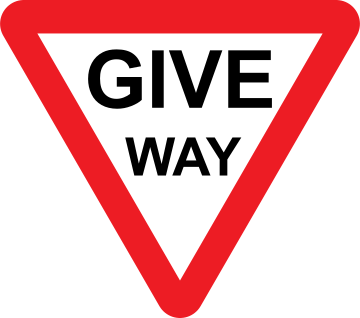
Give Way
Inverted triangle — upside-down caution means yield control to others.
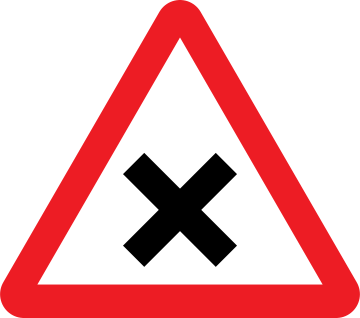
Crossroads Ahead
Triangle with a plus-sign inside — plus = cross = crossroads.
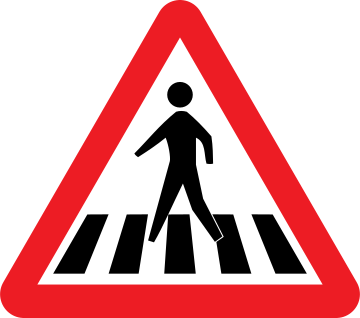
Pedestrian Crossing Ahead
Triangle with walking figure — someone is about to cross your path.
fine for failing to give way to pedestrians at a crossing
Causing injury: prosecution under BNS s.281 (rash driving)
Source: MVA 1988 s.177 (as amended 2019)
At an unmarked crossroads, Car A is approaching from the north and Car B is approaching from the west. Both arrive at the same time. Who has right of way?
Tap an option to reveal the answer
- ✓Emergency vehicles with sirens always have absolute top priority — pull left and stop.
- ✓At uncontrolled intersections, yield to the vehicle on your right.
- ✓Pedestrians crossing on green have absolute right of way over turning vehicles.
- ✓Merging vehicles always yield to vehicles already in the lane.
- ✓The give-way sign means slow down and be prepared to stop — not a suggestion.
Lawful provides legal information, not legal advice.