Mandatory Signs — You Must
You see a Give Way sign at a junction. You slow down but do not stop. The officer who saw you says you violated a mandatory sign. You thought it was just advisory. It is not — and this lesson explains exactly why.
Mandatory = legally binding
Mandatory signs are circular with a red border (or red background). They carry the full force of law under the Motor Vehicles Act 1988. Disobeying any mandatory sign is an offence under Section 177 — and certain violations (No Entry, wrong-way driving) are non-compoundable, meaning you cannot settle on the spot.
fine for disobeying a mandatory sign
Section 177, MVA 1988 — first offence. Repeat: up to ₹1,500.
Source: MVA 1988 s.177
Octagonal red background. You must come to a complete stop before the stop line — not just slow down. Even a slow roll-through is a legal violation under s.177A. The shape alone is internationally recognised even if paint is faded.
Absolutely no vehicle of any type may enter from this point. No Entry often indicates one-way traffic coming at you — entering is both an offence and extremely dangerous. This is a non-compoundable violation.
A number inside a red ring is a hard legal maximum, not a recommendation. MoRTH 2018 circular set the urban default speed at 50 km/h even without a posted sign. Exceeding the posted limit is Section 183 overspeeding — fines start at ₹1,000 for cars.
Key mandatory signs — learn each one

Stop
Octagonal red — the only 8-sided sign in India. Shape alone tells you to stop even if the paint is faded.
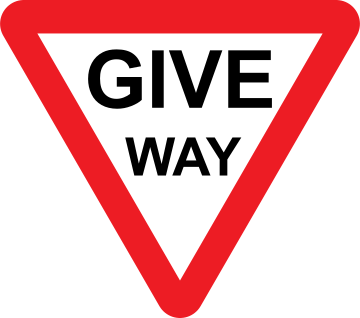
Give Way
Inverted triangle — upside-down caution means yield control to others.
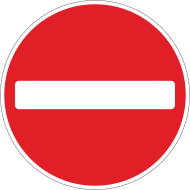
No Entry
White horizontal bar on red circle — a closed door. Nothing gets through.
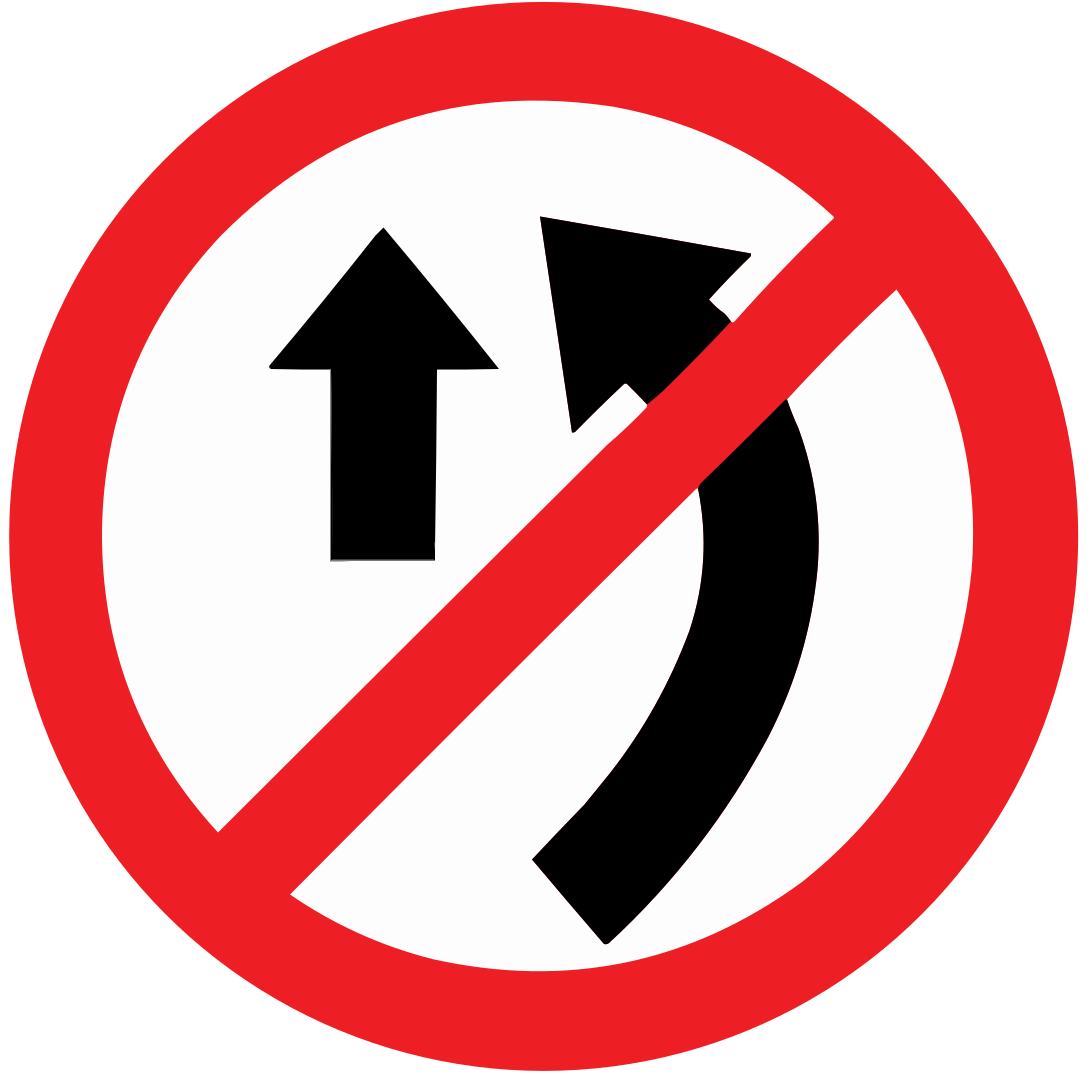
No Overtaking
Two cars side by side with a cross — a tug-of-war you are forbidden to start.
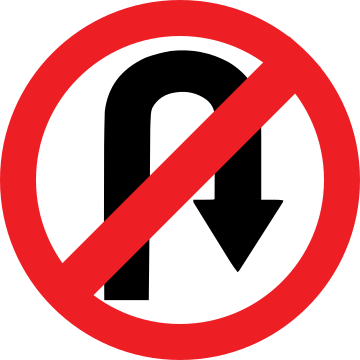
No U-Turn
U-arrow with a cross — the letter U itself is banned.

Keep Left
Blue circle with white arrow pointing left — blue means positive instruction, not prohibition.
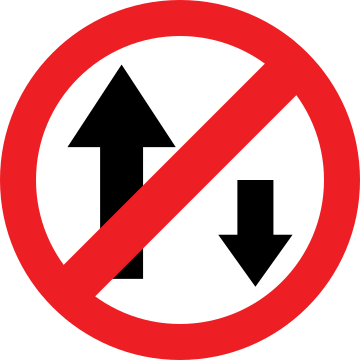
One Way
Large white arrow on blue — the road is a one-track mind.
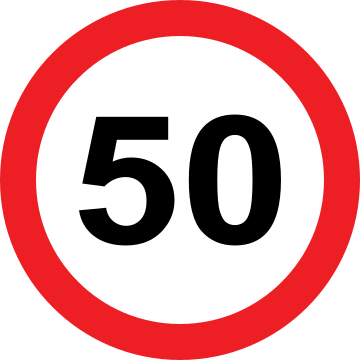
Speed Limit 50 km/h
50 in a red ring — half a century, half the highway speed.
Direction mandatory signs — the blue circles
Compulsory direction signs (turn left, go straight, roundabout) are mandatory signs with a blue background rather than a red border. Blue circle = you must go in that direction. These are common at one-way streets and roundabouts.
Compulsory direction signs
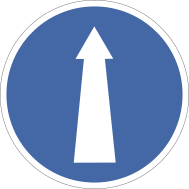
Compulsory Go Straight
Blue circle, upward arrow — the road only goes one way: forward.
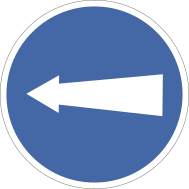
Compulsory Turn Left
Blue circle, left-curving arrow — the road has made the decision for you.
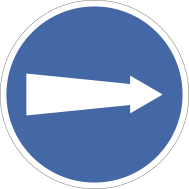
Compulsory Turn Right
Blue circle, right-curving arrow — mandatory detour right.
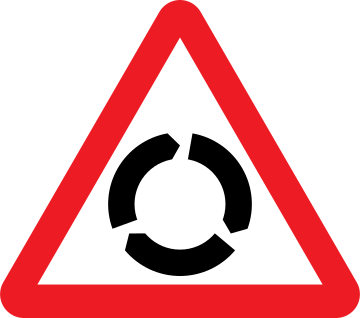
Roundabout / Traffic Circle
Three arrows in a circle — everyone flows together anti-clockwise like a drain.
Which of these describes a mandatory sign?
Tap an option to reveal the answer
- ✓All circular signs with red border = mandatory, all legally binding under MVA s.177
- ✓Stop sign = octagonal red — the only non-circular mandatory sign in India
- ✓No Entry = non-compoundable — cannot be settled on the spot
- ✓Speed limit in a red ring = hard legal maximum, not advisory
- ✓Blue circles = compulsory direction — you must go that way
Lawful provides legal information, not legal advice.